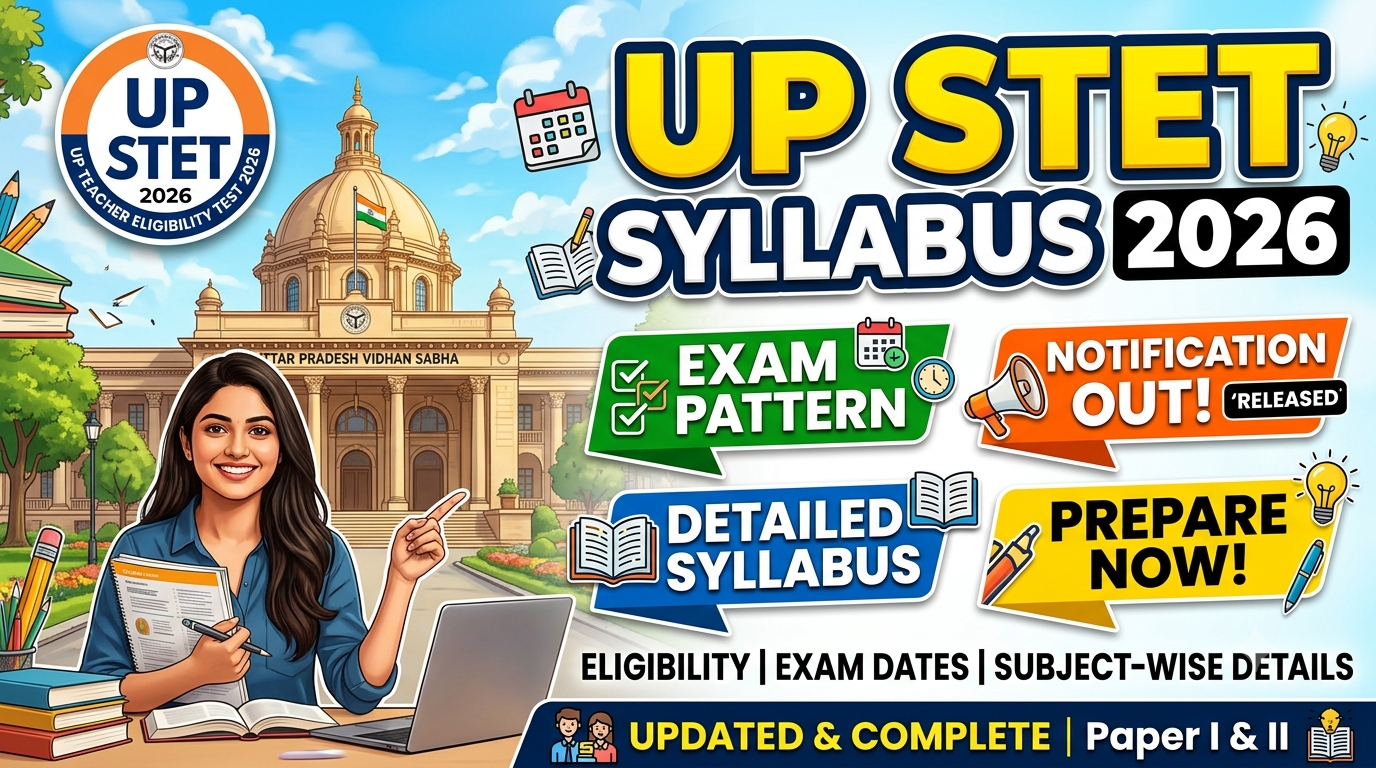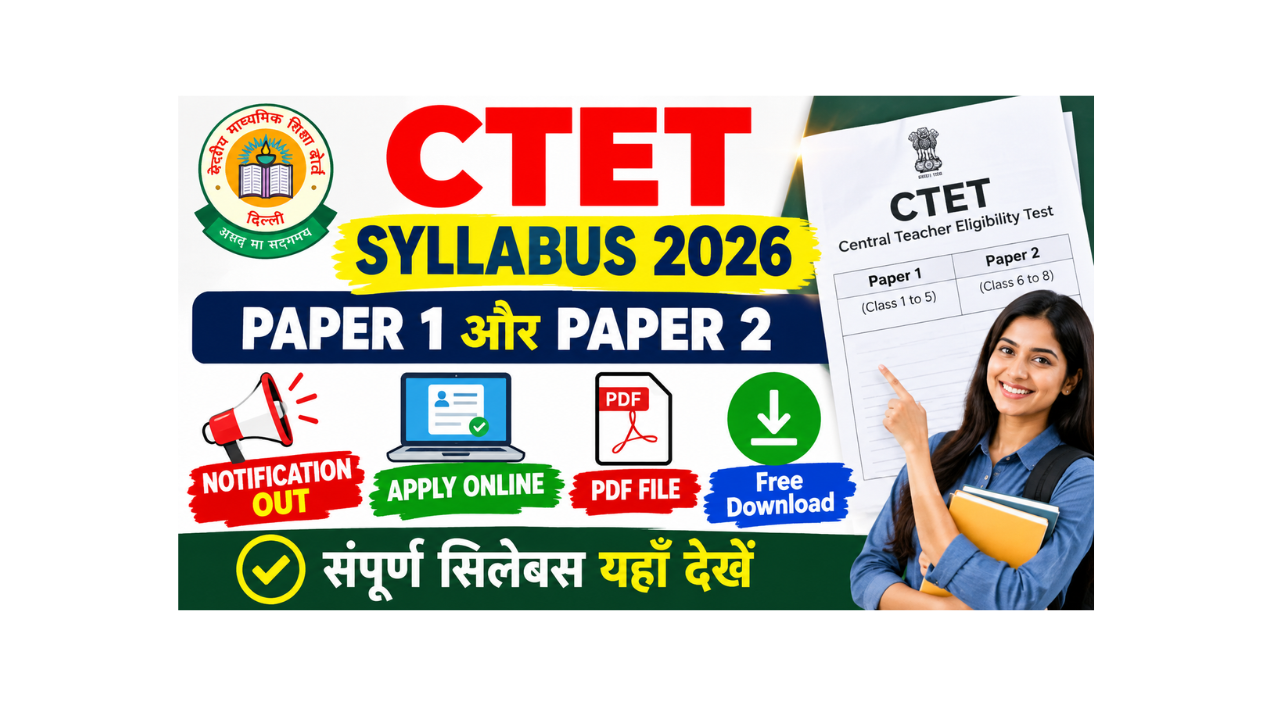
The Central Teacher Eligibility Test is one of the most important gateways into a teaching career in India’s central government schools, and getting your preparation right starts with genuinely understanding the syllabus rather than skimming a summary and hoping for the best. CBSE has released the CTET Syllabus 2026 for both Paper 1 and Paper 2, and the exam is scheduled for 6th September 2026, conducted in offline OMR-based mode.
This guide walks through the complete syllabus for both papers, the exam pattern, subject-wise topic breakdowns, and how to access the official syllabus PDF, so you can build your study plan around what’s actually being tested rather than guesswork.
Paper 1 and Paper 2: Which One Do You Need?
Before diving into topics, it’s worth being absolutely clear on which paper applies to you, since a lot of preparation time gets wasted on the wrong paper’s content.
Paper 1 is meant for candidates who want to teach Classes 1 to 5, at the primary school stage. If your goal is a primary teaching role, this is your paper.
Paper 2 is meant for candidates aiming to teach Classes 6 to 8, at the upper primary stage. If you’re targeting a middle-school teaching position, Paper 2 is what you need.
If you want the flexibility to teach anywhere from Class 1 through Class 8, you’re required to appear for both papers. Many candidates choose to do exactly this, since it widens the range of teaching vacancies they become eligible for later, even if it means a heavier preparation load upfront.
CTET Exam Pattern: The Basics You Should Know First
Both papers follow a similar structural logic, though the subject composition differs. Each paper consists of 150 multiple-choice questions carrying 150 marks, and importantly, there is no negative marking in either paper. This means every question is worth attempting, since an incorrect answer costs you nothing beyond the marks you’d have gained from a correct one.
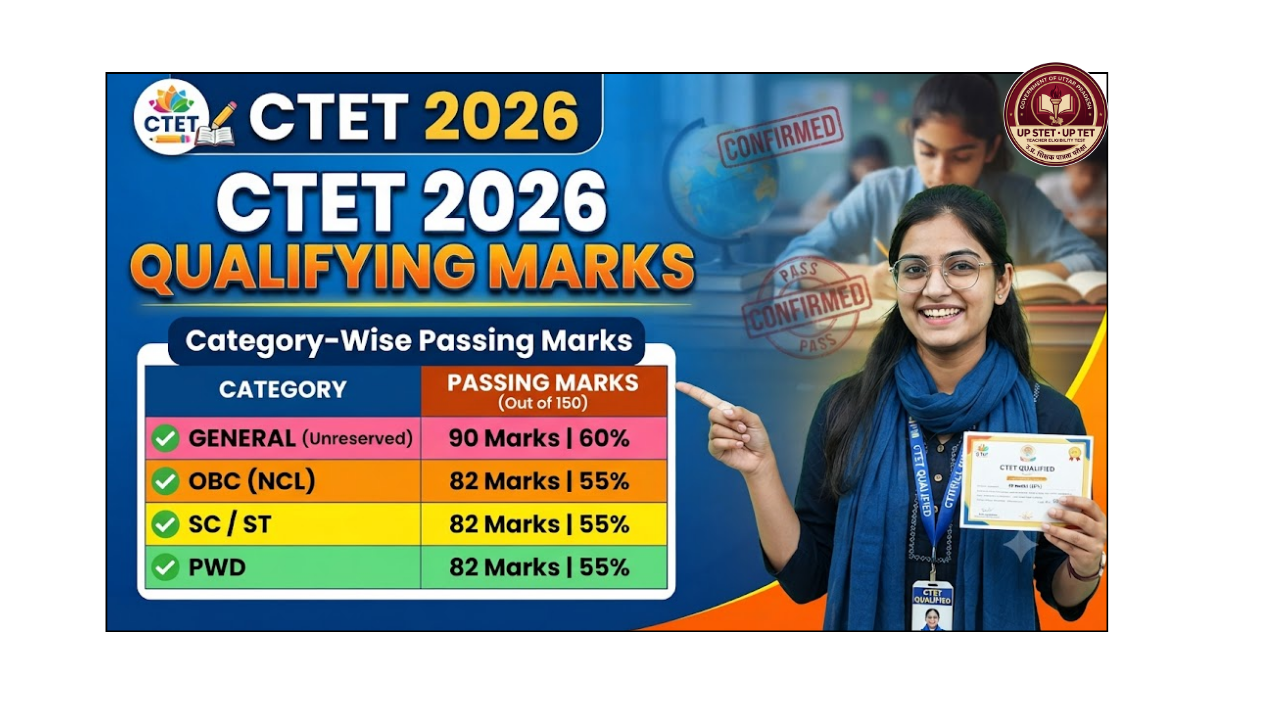
To qualify, general category candidates need approximately 60% marks (90 out of 150), while SC, ST, OBC, and PwD candidates need approximately 55% marks (82 out of 150). The exam is conducted in a two-and-a-half-hour window for each paper, and candidates appearing for both papers on the same day get a combined window to attempt them.
CTET Paper 1 Syllabus: Subject-Wise Breakdown (Classes 1 to 5)
Paper 1 is structured across five distinct sections, each carrying 30 questions and 30 marks, adding up to the full 150-question paper.
1. Child Development and Pedagogy (30 Questions)
This section evaluates your of how children grow, think, and learn, and it’s often the section that separates well-prepared candidates from the rest, since it’s less about memorization and more about conceptual clarity. Key areas include the concept of child development and its connection to learning, principles of child development, influence of heredity and environment, socialization processes, Piaget, Kohlberg, and Vygotsky’s theories of cognitive development, concepts of child-centered and progressive education, critical perspectives on the construct of intelligence and multiple intelligences, language and thought, gender as a social construct and gender roles in the classroom, individual differences among learners, assessment of learning versus assessment for learning, and of inclusive education along with catering to children with special needs and learning difficulties.
2. Language I (30 Questions)
This tests your proficiency and pedagogical of the language you choose as your medium of instruction. It covers reading comprehension of unseen passages, elements of language and grammar, pedagogy of language development including learning and acquisition, principles of language teaching, the role of listening and speaking skills, functions of language and how a classroom facilitates second-language acquisition, challenges and remedial teaching approaches for language difficulties, and evaluation approaches for language proficiency, including the difference between speech and writing skills.
3. Language II (30 Questions)
This section works similarly to Language I but assesses a second language of your choice, distinct from the one selected for Language I. The topic areas broadly mirror Language I: comprehension passages, grammar, pedagogical issues, language skills development, and evaluation of language competency, but applied to the second language.
4. Mathematics (30 Questions)
The Mathematics section for Paper 1 covers content areas including geometry, shapes and spatial , numbers, addition, subtraction, multiplication, division, measurement, weight, time and money, data handling, and patterns, along with the pedagogical side: nature of mathematics, logical thinking, place of mathematics in the curriculum, language of mathematics, community mathematics, evaluation through formal and informal methods, problems of teaching mathematics, and error analysis of common student mistakes.
5. Environmental Studies (30 Questions)
Environmental Studies at the primary level covers family and friends, relationships, work and play, animals, plants, food, shelter, water, travel, and things we make and do. On the pedagogical side, it includes the concept and scope of EVS, its significance and integration with Science and Social Studies, environmental studies and environmental education, learning principles, scope and relation to Science and Social Science, approaches of presenting concepts, activities, experimentation and discovery-based practical work, discussion of environmental issues in the syllabus, CCE (Continuous and Comprehensive Evaluation), teaching material and aids, and problems associated with teaching EVS.
CTET Paper 2 Syllabus: Subject-Wise Breakdown (Classes 6 to 8)
Paper 2 also totals 150 questions across four sections, but with a key structural difference in how the subject-specific portion works.
1. Child Development and Pedagogy (30 Questions)
This section is compulsory for all Paper 2 candidates regardless of subject specialization, and it closely mirrors the Paper 1 syllabus but with content oriented toward the upper primary age group. It covers the same foundational theories of child development, learning theories, inclusive education, and assessment concepts, adjusted to reflect the cognitive and social development stage of 11 to 14-year-olds.
2. Language I (30 Questions)
Similar in structure to Paper 1’s Language I section, this evaluates language proficiency and pedagogy at a level appropriate for upper primary learners, covering comprehension, grammar, language acquisition theory, and teaching methodology.
3. Language II (30 Questions)
A second language paper distinct from Language I, following the same pattern of comprehension, grammar, and pedagogy, but again pitched toward upper primary teaching requirements.
4. Mathematics and Science, OR Social Studies/Social Science (60 Questions)
This is where Paper 2 differs meaningfully from Paper 1. Candidates must choose one of two specialization tracks for the remaining 60 questions:
Mathematics and Science — chosen by candidates who want to teach these subjects at the upper primary level. This combines content from both disciplines: for Mathematics, topics include number systems, algebra, geometry, mensuration, data handling, and pedagogical issues in teaching mathematics at the upper primary stage; for Science, topics include food, materials, the world of living organisms, moving things, people and ideas, how things work, natural phenomena, natural resources, and pedagogical issues specific to Science teaching.
Social Studies/Social Science — chosen by candidates aiming to teach this subject instead. It covers History (topics such as the earliest societies, empires, and the modern period through to contemporary India), Geography (topics including the Earth, globe, environment, resources, agriculture, and human habitation), Social and Political Life (democracy, government, local self-governance, and social justice concepts), and pedagogical issues related to teaching social science effectively at the upper primary level.
A candidate can only choose one of these two tracks, not both, so it’s worth deciding early which track aligns with your subject background and target teaching role, since your entire preparation strategy for that 60-question block depends on this choice.
Why the Syllabus Structure Matters for Your Preparation
this breakdown isn’t just an academic exercise. It directly shapes how you allocate your study time. Child Development and Pedagogy appears in both papers and carries meaningful weight (30 out of 150 marks, exactly 20% of the paper), yet many candidates underprepare for it because it feels less “concrete” than subject content. In reality, it’s a section built on a relatively fixed set of theorists and concepts, making it one of the more efficiently scorable sections if you study it properly rather than skimming it late in your preparation.
Similarly, the language sections test not just your command of the language but your of how children acquire language and how to teach it, which is a distinct skill from simply being fluent yourself. Candidates who are strong in a language but haven’t studied the pedagogical angle often lose marks they assumed were guaranteed.
How to Download the Official CTET Syllabus PDF
While this guide covers the syllabus in detail, it’s always good practice to cross-check against the official document before finalizing your preparation plan. Here’s how to access it directly from CBSE:
Visit the official CTET website, locate the notification or syllabus section on the homepage, find the link for the CTET 2026 Information Bulletin or Syllabus PDF, click to open or download the document, and save it for reference alongside your study material. The official PDF also includes the detailed exam pattern, marking scheme, and any subject-specific clarifications that may not always make it into secondary summaries.
Preparation Tips Based on the Syllabus Structure
Since there’s no negative marking, attempting every single question in both papers is the correct strategy regardless of how confident you feel about any particular answer. Build your study schedule around the section weightage rather than personal preference, giving Child Development and Pedagogy the attention it deserves given its consistent presence across both papers. Practice previous years’ question papers specifically to understand how theoretical pedagogy concepts get converted into exam questions, since this is often where the gap between “knowing the theory” and “answering exam questions correctly” becomes obvious. For Paper 2 candidates, decide on your Mathematics-Science versus Social Studies track early, since splitting preparation time between both tracks is inefficient and unnecessary.
Frequently Asked Questions
Is there negative marking in CTET 2026? No, there is no negative marking in either Paper 1 or Paper 2. Candidates should attempt all questions.
Can I appear for both Paper 1 and Paper 2? Yes, candidates aiming to be eligible for teaching Classes 1 through 8 can and should appear for both papers.
What is the qualifying percentage for CTET? General category candidates need approximately 60% marks, while SC, ST, OBC, and PwD candidates need approximately 55% marks to qualify.
How long is the CTET certificate valid? The CTET qualifying certificate is valid for a lifetime from the date of result declaration.
Can I choose between Mathematics-Science and Social Studies in Paper 2? Yes, Paper 2 candidates must choose one of these two tracks for the final 60-question block, based on their intended teaching subject.
Helpful Links and Resources
| Resource | Description |
|---|---|
| CTET Official Website | Official CBSE portal for CTET notifications, application, syllabus, and results |
| CTET Syllabus PDF (Official Bulletin) | Download the detailed Information Bulletin containing the full syllabus, exam pattern, and marking scheme directly from CBSE |
| CBSE Official Website | Central Board of Secondary Education’s main portal for broader announcements |
| NCERT Official Website | Useful for accessing NCERT textbooks that align closely with CTET’s content syllabus |